Oral vs Injection - BPC-157 and TB-500 Routes in Research
How BPC-157 and TB-500 were administered in studies - oral, subcutaneous and intraperitoneal routes. Bioavailability data, what vendors actually sell and key differences.
The route of administration is one of the most practical questions surrounding the BPC-157 and TB-500 stack. Published animal research has tested BPC-157 through oral, subcutaneous, intraperitoneal and topical delivery. TB-500 research is narrower, with almost all studies relying on injectable routes. We reviewed the published literature for both peptides to clarify what each route actually involves, what the bioavailability data shows and what vendors currently sell. All efficacy data discussed here comes from animal models. Neither peptide is FDA-approved for human use.
Routes of Administration in Published Studies
BPC-157 - Oral and Injectable Protocols in Animal Models
BPC-157 has been tested through multiple administration routes in rodent models. Oral gavage (delivering the peptide directly into the stomach) is the most common route in gut protection studies. Intraperitoneal injection (IP) is standard in musculoskeletal injury models. Subcutaneous injection has been used in wound healing experiments. A smaller number of studies applied BPC-157 topically to skin wounds or directly to surgical sites.
The Sikiric 1999 review documented BPC-157's activity when given orally in multiple gastric lesion models in rats. In these studies, oral BPC-157 reduced ethanol-induced gastric damage, NSAID-induced ulceration and stress-related mucosal injury. The same review noted that BPC-157 remained stable at pH values between 1 and 2 for extended periods, which is unusual for a peptide of its size. This acid stability is a property that most peptides, including TB-500, do not share.
Injectable routes in BPC-157 research have primarily used intraperitoneal delivery in rats. The Pevec 2010 study on Achilles tendon healing in rats used IP injection. A 2009 muscle and tendon healing study also used IP delivery. Subcutaneous injection appears in fewer publications but was used in some wound and skin healing experiments.
TB-500 - Injectable Protocols (Oral Data Limited)
TB-500, a synthetic fragment of Thymosin Beta-4, has been studied almost exclusively through injectable routes. Intraperitoneal and subcutaneous injection are the standard delivery methods in published mouse and rat studies. A 1999 study by Malinda et al. used IP injection of Thymosin Beta-4 in a dermal wound model in rats. A 2004 cardiac repair study in mice used IP delivery of TB-4 following myocardial infarction.
No published studies testing oral TB-500 or oral Thymosin Beta-4 in any animal model were identified. TB-4 is a 43-amino-acid protein that lacks the acid stability demonstrated by BPC-157. Without data showing oral bioavailability, the assumption should be that oral TB-500 administration has no evidence base. This is a meaningful gap for anyone considering oral delivery of a stack containing both peptides.
| Peptide | Route | Species | Model | Notes |
|---|---|---|---|---|
| BPC-157 | Oral (gavage) | Rat | Gastric lesions, NSAID damage | Multiple studies; acid-stable at pH 1-2 |
| BPC-157 | Intraperitoneal | Rat | Tendon, muscle, nerve injury | Most common route in musculoskeletal models |
| BPC-157 | Subcutaneous | Rat | Wound healing | Fewer studies than IP |
| BPC-157 | Topical | Rat | Skin wounds | Direct application to injury site |
| TB-500 | Intraperitoneal | Mouse, Rat | Cardiac, dermal wounds | Standard route in all published models |
| TB-500 | Subcutaneous | Mouse, Rat | Wound healing | Used in some healing studies |
| TB-500 | Oral | None | None | No published data |
Bioavailability Differences by Route
BPC-157 Oral Stability - What Studies Show
The stability of BPC-157 in acidic environments is documented in several publications. A 1999 study confirmed that BPC-157 maintained structural integrity after prolonged exposure to gastric acid conditions. This acid resistance allows the peptide to survive passage through the stomach, which is where most oral peptides are degraded.
However, surviving gastric acid is not the same as achieving systemic bioavailability. BPC-157's oral effects have been demonstrated primarily in gut-specific models, where the peptide acts locally on gastric tissue. Whether orally administered BPC-157 reaches tendons, muscles or other distant tissues in therapeutic concentrations remains poorly characterized. A pharmacokinetic study measured intramuscular bioavailability of approximately 14-19% in rats and 45-51% in dogs, but comprehensive oral bioavailability data for systemic endpoints is limited.
It is worth noting that the oral data for BPC-157 is strongest in gastrointestinal models. Extrapolating oral effectiveness to musculoskeletal or systemic applications requires assumptions that published research has not yet validated.
TB-500 Oral Stability - Limited Evidence
Thymosin Beta-4 is a 43-amino-acid protein. Proteins of this size are generally susceptible to proteolytic degradation in the stomach and small intestine. No published study has tested oral TB-500 bioavailability in any species. Without stability data at gastric pH or absorption data from the GI tract, there is no scientific basis for expecting oral TB-500 to produce systemic effects.
This creates a fundamental problem for anyone who wants to administer both peptides through the same oral route. BPC-157 has at least some oral evidence, albeit primarily in gut models. TB-500 has none. We cannot recommend oral TB-500 based on the current literature because the evidence simply does not exist.
What Vendors Actually Sell
Lyophilized Powder Vials (Not Pre-Made Oral Products)
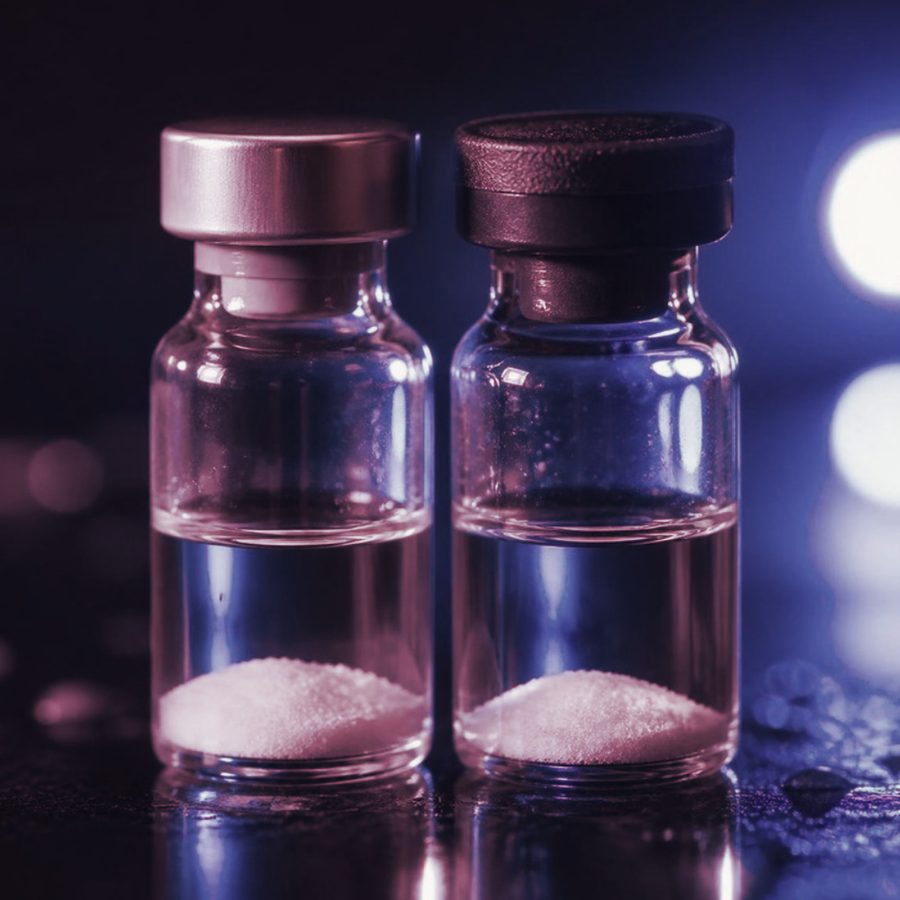
Both PeptideGod and Real Peptides sell BPC-157 and TB-500 as lyophilized (freeze-dried) powder in sealed vials. These vials require reconstitution with bacteriostatic water before use. The powder format is standard for research peptides and is designed for injection after reconstitution. A lyophilized powder vial is not an oral capsule, not a tablet and not a pre-measured oral preparation.
This distinction matters because we have seen confusion in online discussions where users assume that purchasing a vial means they can simply drink the reconstituted solution. While BPC-157 has some published oral data in animals, the products sold by these vendors were not designed, labeled or tested as oral supplements. They are sold as lyophilized research peptides intended for reconstitution.
Are Capsule Forms Available from Our Listed Vendors
No. Neither PeptideGod nor Real Peptides sells oral BPC-157 capsules, oral TB-500 capsules or any oral formulation of either peptide. Every product listed on both vendor sites is a lyophilized powder vial. We checked the product pages directly to confirm this.
| Vendor | Product | Form | Oral Capsule? | Price |
|---|---|---|---|---|
| PeptideGod | BPC-157 | Lyophilized powder vial | No | $34.95 |
| PeptideGod | TB-500 | Lyophilized powder vial | No | $35.00 |
| PeptideGod | BPC-157 + TB-500 Blend | Lyophilized powder vial | No | $59.95 |
| Real Peptides | BPC-157 10 mg | Lyophilized powder vial | No | $43.20 |
| Real Peptides | TB-500 10 mg | Lyophilized powder vial | No | $48.00 |
| Real Peptides | Bacteriostatic Water | 10 ml sterile vial | N/A | $4.80 |
Practical Differences
Storage and Handling
Lyophilized powder vials should be stored in a refrigerator (2-8 C) before reconstitution. Once reconstituted with bacteriostatic water, the solution should remain refrigerated and used within 28 days. These storage requirements apply regardless of whether the researcher intends to use oral or injectable routes. Heat, light and repeated freeze-thaw cycles degrade peptide integrity.
If a researcher chooses to administer reconstituted BPC-157 orally, the solution must still be stored and handled identically to injectable preparations. There is no storage advantage to oral delivery. The handling requirements are the same because the starting material is the same lyophilized powder.
Route-Specific Considerations from Research
In animal studies, injectable BPC-157 (typically IP) was the route of choice for musculoskeletal injury models. Oral BPC-157 was the route of choice for gastrointestinal injury models. This pattern in the literature suggests that researchers selected the route based on the target tissue. For gut-related endpoints, oral delivery placed the peptide directly at the site of action. For tendon or muscle endpoints, systemic injection was preferred to ensure the peptide reached the injury site.
No published study has compared oral versus injectable BPC-157 in the same musculoskeletal model to determine whether oral administration can match injectable results for non-gut endpoints. This comparison has not been performed, and the question remains open. For a detailed look at dosage protocols used in studies, see our dosage page.
What to Choose - Three Scenarios
If Your Research Requires Oral Administration
BPC-157 has published oral data in rat models for gastrointestinal endpoints. If the research question involves gut protection, oral administration aligns with the published methodology. TB-500 has no oral data, so combining both peptides in an oral protocol means one compound has some oral evidence and the other has none. Researchers should be transparent about this asymmetry in any study design.
If Your Research Requires Subcutaneous Routes
Both BPC-157 and TB-500 have been tested through injectable routes in published research. Subcutaneous and intraperitoneal injection are well-documented for both peptides. This route provides more consistent systemic delivery and aligns with the majority of published musculoskeletal and wound healing studies. If the research question involves tendon, muscle or cardiac tissue, injectable delivery matches the published protocols.
If Convenience Is the Priority
Oral administration is simpler than injection from a practical standpoint. It requires no syringes, no sterile technique and carries no injection site reactions. However, convenience should not override the evidence gap. Oral TB-500 has zero published support. Taking a compound orally when no study has demonstrated oral activity means the route selection is based on assumption, not data. We think researchers should weigh convenience against the complete absence of oral evidence for one of the two compounds in the stack.
FAQ - Oral vs Injection Stack
Can BPC-157 be taken orally based on research?
BPC-157 has demonstrated oral activity in rat models of gastric injury. The peptide is stable at gastric pH and showed protective effects when given by oral gavage. However, these studies tested gut-specific endpoints. Whether oral BPC-157 reaches distant tissues such as tendons or muscles in sufficient concentration to produce effects has not been established. Oral stability does not automatically mean oral systemic efficacy.
Is oral TB-500 effective based on studies?
No published study has tested oral TB-500 or oral Thymosin Beta-4 in any species. TB-4 is a 43-amino-acid protein without documented acid stability. All published TB-500 research used injectable routes (intraperitoneal or subcutaneous). Without even basic oral bioavailability data, there is no evidence base for oral TB-500 administration.
Do PeptideGod or Real Peptides sell oral BPC-157 capsules?
No. Both vendors sell lyophilized powder vials only. These vials contain freeze-dried peptide powder that requires reconstitution with bacteriostatic water. Neither vendor offers capsules, tablets, or any oral formulation of BPC-157 or TB-500. A powder vial is not an oral product.
What is the difference between a vial and a capsule?
A lyophilized powder vial contains freeze-dried peptide in a sealed glass vial with a rubber stopper. It must be reconstituted with sterile diluent before use and is designed for injection. An oral capsule is a pre-measured dose of compound enclosed in a gelatin or cellulose shell designed for swallowing. The two formats are fundamentally different in design, handling and intended route. Our listed vendors sell vials, not capsules.
Which route showed better results in animal studies?
For BPC-157 in gut models, oral and injectable routes both showed protective effects in rat studies. For musculoskeletal models (tendon, muscle), injectable BPC-157 was the route used and we have no oral comparison data for these tissues. For TB-500, only injectable routes have been tested. No head-to-head study has compared oral versus injectable BPC-157 for non-gut endpoints, so the question of which route is "better" for systemic effects remains unanswered.
Compare the current picks
Prices, sizes and ratings side by side, updated when the merchant pages change.
Shop Stack