BPC-157 and TB-500 Dosage Data from Published Research
Published study doses for BPC-157 and TB-500 in animal models. Species, route, dose per kg, frequency and duration from peer-reviewed papers. No human dosing advice.
Searching for bpc 157 tb 500 dosage information returns thousands of forum posts, vendor guides and influencer protocols. Almost none cite primary research. The published literature on both peptides consists entirely of animal studies, and the doses used in those studies were selected for specific species, injury models and administration routes that have no direct human parallel. We compiled every relevant dosing protocol from PubMed below so that researchers can evaluate the actual data rather than rely on secondhand claims. Neither BPC-157 nor TB-500 is approved for human use by the FDA or any other regulatory body.
Published BPC-157 Doses in Animal Studies
BPC-157 has been studied in rats across multiple injury models since the late 1990s. The dose range is narrow: nearly every protocol uses 10 mcg/kg body weight, administered once daily. Some studies also tested a lower dose of 10 ng/kg. The routes vary between intraperitoneal (IP), subcutaneous (SC) and oral (intragastric) administration. Each route produces different pharmacokinetic profiles and cannot be treated as interchangeable.
| Species | Injury Model | Route | Dose (mcg/kg) | Frequency | Duration | Key Outcome | PMID |
|---|---|---|---|---|---|---|---|
| Rat | Achilles tendon transection | SC | 10 | Once daily | 14 days | Improved load to failure and stiffness | 21030672 |
| Rat | Muscle crush injury | IP | 10 | Once daily | 14 days | Reduced edema and fibrosis, faster functional recovery | 20225319 |
| Rat | Gastric lesions (ethanol-induced) | Oral (intragastric) | 10 | Single dose | Acute | Prevented gastric mucosal damage | 10672996 |
| Rat | Angiogenesis model | IP | 10 | Once daily | Variable | Increased VEGF expression and new vessel formation | 23782145 |
Subcutaneous and Intraperitoneal Protocols
The majority of BPC-157 injection studies in rats used intraperitoneal delivery at 10 mcg/kg once daily. IP injection places the peptide into the peritoneal cavity, where it is absorbed through the mesenteric circulation into the portal vein. This provides rapid systemic exposure but is a route used exclusively in rodent research. A smaller number of studies used subcutaneous injection, including the Achilles tendon protocol (PMID 21030672) that delivered 10 mcg/kg SC once daily for 14 days. The muscle crush injury study (PMID 20225319) used IP at the same dose and frequency.
A 2022 pharmacokinetic study measured intramuscular bioavailability at 14-19% in rats and 45-51% in dogs. Subcutaneous and intraperitoneal routes were not directly compared, but the data confirms that absorption profiles differ substantially between species even within injection routes. Duration across these protocols ranged from 7 to 28 days, with 14 days being the most common assessment point.
Oral (Intragastric) Protocols
BPC-157 is stable at gastric pH levels of 1-2 for over 24 hours, which makes oral administration feasible in animal experiments. The gastric lesion study (PMID 10672996) administered 10 mcg/kg intragastrically as a single dose before ethanol challenge in rats. The peptide prevented mucosal damage in a dose-dependent fashion. Additional oral studies in colitis and fistula models used similar doses over longer treatment windows.
Oral bioavailability for systemic targets remains poorly characterized. A 2022 PK study found oral bioavailability of 2-7% in rats and 3-5% in dogs, roughly one-tenth of the intramuscular value. For gastrointestinal targets, oral delivery provides high local concentrations at the gut mucosa regardless of systemic absorption. For targets outside the GI tract, the lower systemic exposure raises questions about whether oral doses produce meaningful tissue concentrations at distant injury sites.
Published TB-500 Doses in Animal Studies
TB-500 is a synthetic analog of Thymosin Beta-4 (TB-4), a 43-amino-acid protein involved in actin polymerization and cell migration. The published bpc 157 tb 500 dosage literature shows that TB-4 doses in animal studies are measured in milligrams per kilogram, not micrograms. This is a significant difference from BPC-157, where doses are typically three orders of magnitude lower. The majority of TB-4 research was conducted using pharmaceutical-grade TB-4, not commercial TB-500 products.
| Species | Injury Model | Route | Dose | Frequency | Duration | Key Outcome | PMID |
|---|---|---|---|---|---|---|---|
| Mouse | Myocardial infarction | IP | 6 mg/kg | Variable | Post-MI period | Reduced scar size, improved cardiac function | 15565145 |
| Rat | Full-thickness dermal wound | Topical | 5 mcg per wound | Applied to wound bed | Until closure | Accelerated wound closure, increased keratinocyte migration | 10469335 |
The cardiac repair study in mice (PMID 15565145) used 6 mg/kg IP, orders of magnitude higher per kilogram than BPC-157 protocols. The wound healing study (PMID 10469335) used topical application of 5 mcg directly to the wound bed, bypassing systemic absorption entirely. These approaches reflect fundamentally different pharmacological strategies and cannot be averaged into a single "TB-500 dose."
The TB-4 literature is smaller than the BPC-157 literature, and fewer injury models have been tested. The bpc 157 tb 500 dosage question is further complicated by the fact that commercial TB-500 products may differ from the pharmaceutical-grade TB-4 used in published research in terms of sequence fidelity, purity and biological activity.
Why These Doses Do Not Translate Directly to Humans
A persistent misconception is that animal doses can be converted to human doses through simple weight-based arithmetic. A 200 mcg dose in a 250 g rat does not scale proportionally to a 75 kg human. The biology is more complicated, and the FDA has published specific guidance on this topic.
Allometric Scaling: Body Surface Area vs Body Weight
The FDA's Guidance for Industry on Estimating the Maximum Safe Starting Dose describes the body surface area (BSA) method for interspecies dose conversion. This method accounts for differences in metabolic rate, organ blood flow and clearance capacity between species. A rat dose of 10 mcg/kg does not scale linearly to humans. The human equivalent dose (HED) is calculated by dividing the animal dose by a conversion factor of 6.2 for rats or 12.3 for mice.
Even this conversion provides only a rough estimate, not a safe or effective dose. The BSA method was designed for small molecules with well-characterized pharmacokinetics, not for peptides with limited absorption data. For BPC-157 and TB-500 specifically, human pharmacokinetic parameters such as half-life, volume of distribution, protein binding and clearance have never been measured. The HED calculation is a starting point for clinical trial design under medical supervision, not a formula for self-administration.
Route Differences: IP Injection Has No Human Equivalent
Most BPC-157 animal studies used intraperitoneal injection, delivering the compound into the peritoneal cavity. This route is standard in rodent research because it is fast, reliable and does not require anesthesia. IP injection produces rapid absorption through the mesenteric vasculature and portal circulation.
IP injection is not used in human medicine outside narrow clinical contexts such as peritoneal dialysis or intraperitoneal chemotherapy. There is no subcutaneous or intramuscular equivalent that replicates IP pharmacokinetics. Absorption rate, peak plasma concentration and time-to-peak all differ between IP, SC and IM routes. Applying an animal IP dose to a human SC injection without adjustment introduces an unknown and potentially large error.
Bioavailability Unknowns
A 2022 pharmacokinetic study provided the first quantitative bioavailability data for BPC-157 in rats and dogs. Intramuscular bioavailability was 14-19% in rats and 45-51% in dogs. Oral bioavailability was 2-7% in rats and 3-5% in dogs. Bioavailability varies by species and route, sometimes tenfold or more.
Human bioavailability for BPC-157 has never been measured. For TB-500, we found no published pharmacokinetic studies in any species providing quantitative bioavailability values. Without these numbers, calculating what fraction of an administered dose reaches systemic circulation in a human is not possible. Any bpc 157 tb 500 dosage protocol that claims to account for bioavailability in humans is speculating beyond the available evidence.
Reconstitution Arithmetic for Research
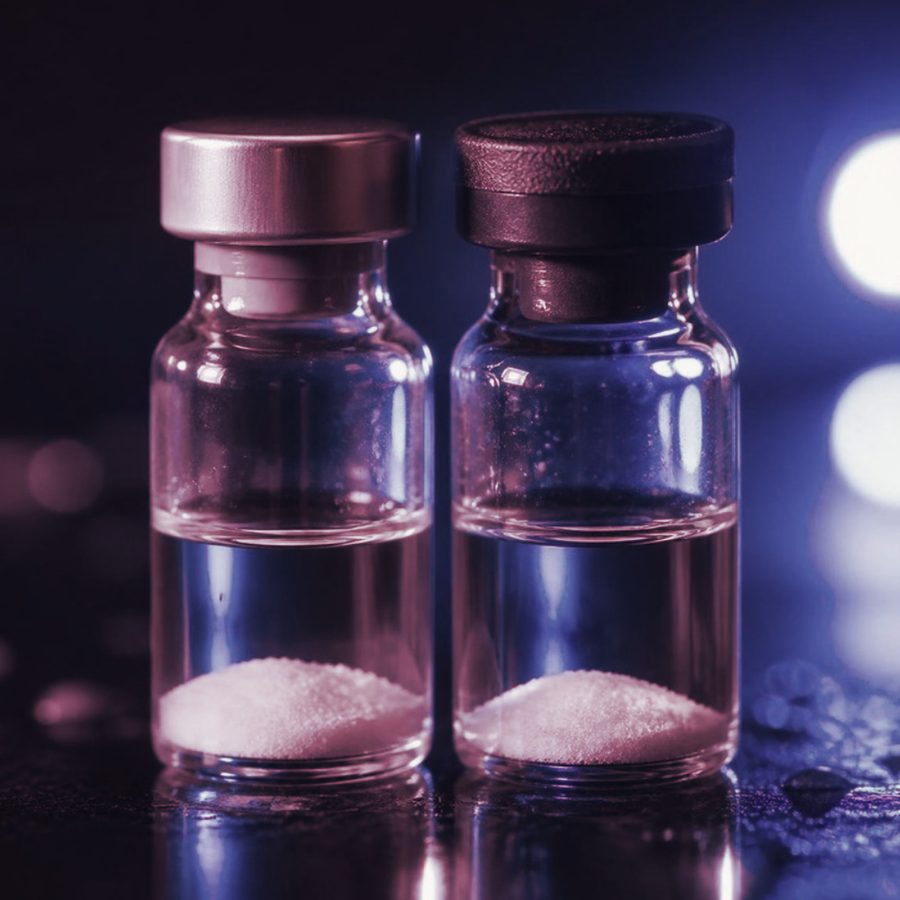
Lyophilized peptides must be reconstituted with a suitable solvent before use in laboratory experiments. The arithmetic below applies to standard vial sizes sold by research peptide suppliers. We present these calculations for researchers working with cell culture or animal models who need to prepare solutions at specific concentrations. For an interactive tool, see our reconstitution calculator.
Concentration Calculations for Common Vial Sizes
The formula is straightforward. Divide the total peptide content (converted to micrograms) by the volume of solvent added (in milliliters) to obtain the concentration in mcg/mL. For example, a 5 mg vial reconstituted with 2 mL of bacteriostatic water yields a concentration of 2,500 mcg/mL. The same vial with 1 mL yields 5,000 mcg/mL.
For TB-500, vial sizes are typically larger because the doses used in animal research were in milligrams rather than micrograms. A 5 mg TB-500 vial reconstituted with 1 mL produces a 5,000 mcg/mL solution, the same arithmetic as BPC-157. The difference lies in the volumes drawn per injection in research protocols, reflecting the different dose ranges between the two peptides.
Volume per Injection at Different Concentrations
Once the concentration is known, the volume needed for a specific microgram amount is calculated by dividing the target amount by the concentration. If a researcher needs 250 mcg from a 2,500 mcg/mL solution, the required draw volume is 0.1 mL. On a standard 1 mL insulin syringe with 100 unit markings, 0.1 mL corresponds to the 10-unit mark.
FAQ: BPC-157 and TB-500 Dosage
What doses of BPC-157 were used in animal studies?
The standard dose across published BPC-157 animal studies is 10 mcg/kg body weight, administered once daily via intraperitoneal or subcutaneous injection in rats. Some studies also tested 10 ng/kg and still reported measurable effects. Oral (intragastric) studies used 10 mcg/kg as well. Treatment durations ranged from acute single doses to 28 days of daily administration, with 14 days being the most common protocol length.
What doses of TB-500 were used in animal studies?
TB-500 (Thymosin Beta-4) doses in animal studies are substantially higher per kilogram than BPC-157 doses. The cardiac repair study in mice used 6 mg/kg IP (PMID 15565145). The wound healing study in rats used topical application of 5 mcg per wound site (PMID 10469335). Fewer studies have been published on TB-4 than on BPC-157, and dose ranges and routes are less standardized across the literature.
Can I calculate a human dose from animal data?
The FDA's guidance on estimating safe starting doses describes allometric scaling using body surface area conversion factors. This method provides a rough starting estimate for Phase I clinical trials conducted under medical supervision with safety monitoring. It was not designed for individual use. For BPC-157 and TB-500, the absence of human pharmacokinetic data, the reliance on IP injection in animal studies and the lack of dose-response curves make any calculated "human dose" speculative. We are not aware of any qualified authority that has endorsed a specific human dose for either peptide.
How do researchers reconstitute BPC-157 and TB-500?
Researchers add a measured volume of bacteriostatic water or sterile saline to the lyophilized peptide vial. The solvent is directed down the inside wall of the vial rather than sprayed onto the powder cake. Gentle swirling dissolves the peptide within one to two minutes. The reconstituted solution is stored at 2-8 degrees Celsius and used within three to four weeks. Standard aseptic technique applies: alcohol-swabbed stoppers, sterile syringes and cold-chain storage. For information on how these peptides have been studied in recovery-focused protocols, we have a separate page.
Is there a standard wolverine stack dosage protocol?
No. The term "wolverine stack" is a marketing label used in online peptide communities for the combination of BPC-157 and TB-500. No published study has tested this combination at any dose in any species using a defined protocol. The individual peptides have been studied separately in different animal models, at different doses, by different routes. Combining them into a "stack" with specific milligram amounts and cycle lengths is not supported by any controlled experiment. We have found no peer-reviewed publication that validates a specific combination protocol.
BPC-157 and TB-500 are not approved by the FDA or any regulatory agency for human therapeutic use. They are sold for laboratory research purposes only. Anyone considering use of these substances should consult a qualified healthcare professional.
Compare the current picks
Prices, sizes and ratings side by side, updated when the merchant pages change.
Shop Stack